


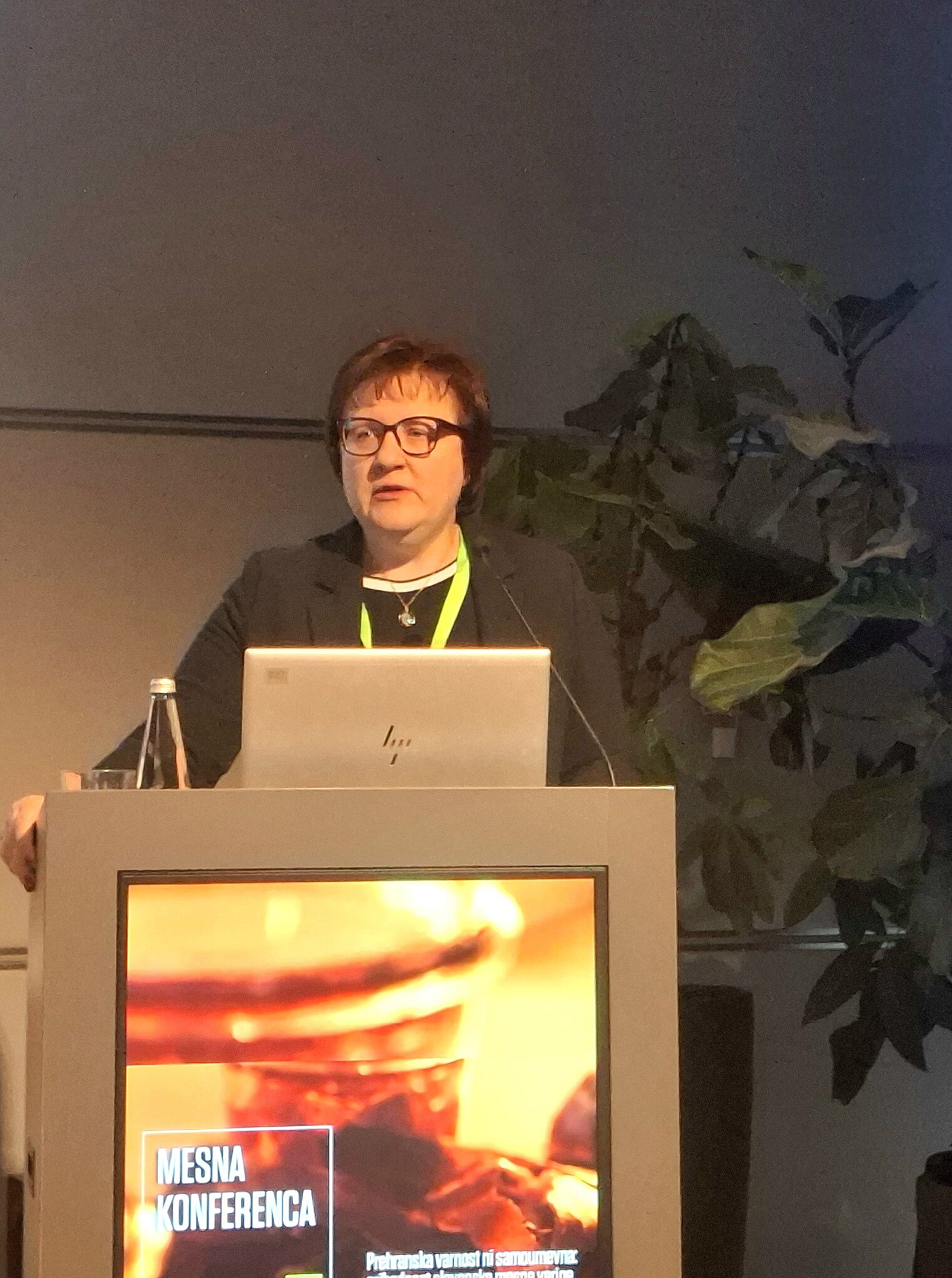

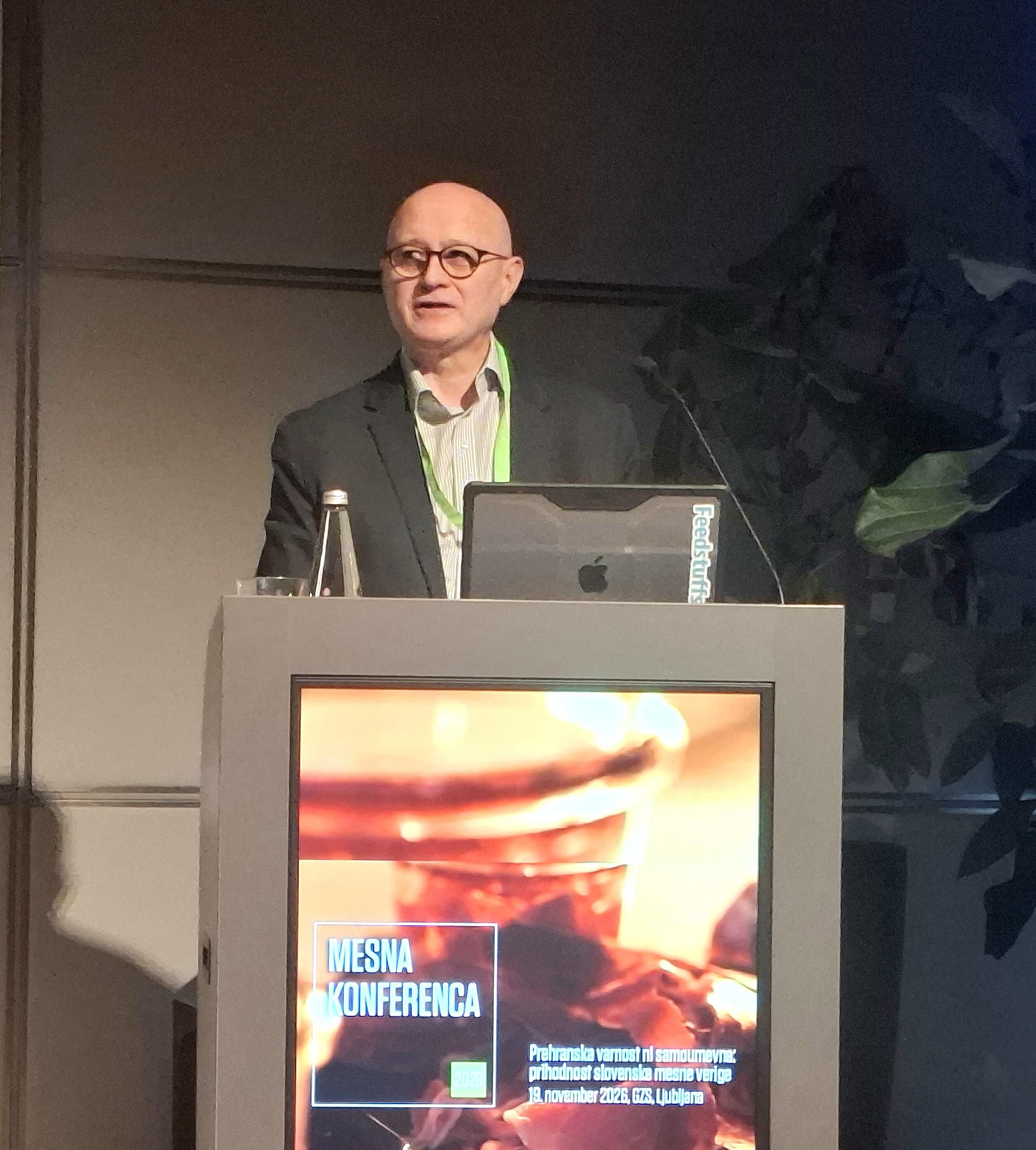
"A strong, interconnected, and competitive meat supply chain is the foundation of food security," concluded participants at the traditional Meat Conference, held on November 19 at the premises of the Chamber of Commerce and Industry of Slovenia (GZS) in Ljubljana. The event was organized by the Chamber of Agricultural and Food Enterprises, which operates within the GZS. Matej Resnik, President of the Meat Industry Association within the Chamber, highlighted the meat industry’s vital role in ensuring the security of the food supply chain in Slovenia. He emphasized the need to develop the entire food chain - rather than just individual segments - including the relationships between farmers, food companies, and retailers. Speaking in his capacity as General Manager of Farme Ihan – KPM (Meso Kamnik), Resnik acknowledged that the meat industry itself must be cost-efficient and accelerate investments; however, he noted that this requires stable purchasing and sales conditions - a challenge that is particularly acute in the pork sector.
There is no state sovereignty without food sovereignty
Addressing the participants of the Meat Conference, Minister of Agriculture Janez Cigler Kralj posed the question of what kind of meat supply chain we envision for Slovenia in the future. He emphasized that without a meat industry and a robust meat supply chain, long-term food security cannot be adequately ensured. The Minister called for more stable domestic meat production and a higher level of self-sufficiency in this sector. "Without food sovereignty, there can be no other form of state sovereignty," Minister Cigler Kralj stated, while also advocating for fair relationships among all stakeholders within the meat supply chain. He pointed out that the meat industry is not merely a standard economic activity; beyond ensuring food security, it also fosters the development of Slovenia’s rural areas and provides food for our citizens.
Growth and investment driven primarily by debt
Dr. Tatjana Zagorc, Director of the Chamber of Commerce and Industry of Slovenia – Chamber of Agricultural and Food Enterprises (GZS-ZKŽP), presented figures from last year: 95 companies in the Slovenian meat-processing industry employed 5,316 people. Over the course of the year, these companies increased their net revenue by 7.7 percent to 1.02 billion euros, value added by 10.8 percent to 257.9 million euros, and EBITDA by a quarter to 70.2 million euros. Investments in this food sector also rose by 22.5 percent, reaching 66.1 million euros - though, in most cases, these were financed through additional corporate borrowing. Dr. Zagorc further noted that a strong meat supply chain cannot exist without livestock farmers and a robust meat-processing industry. She considers it significant that EU representatives have once again classified livestock farming as a strategic sector. Furthermore, she expects the state to support the Slovenian meat-processing industry through the Act on the Promotion of Investments in the Agri-Food Sector, and hopes that retailers and consumers will increasingly recognize the value of specific brands and food products of Slovenian origin.
Meat is in vogue and will become expensive
The keynote speaker at this year’s Meat Conference was Romanian agricultural economist Iani A. Chihaia, who stated: "Meat is in voguen and will become expensive; it is simply unacceptable for a kilogram of meat to cost the same as an hour of parking at a shopping center." He noted that, in this sector, Slovenia is significant more for its geographical location than for the volume of its production. Looking at global markets, we can expect slow but sustained growth in the meat sector - particularly in poultry. Furthermore, the global meat market is set to undergo a structural transformation over the coming decade, one that will demand an increasing level of competitiveness.
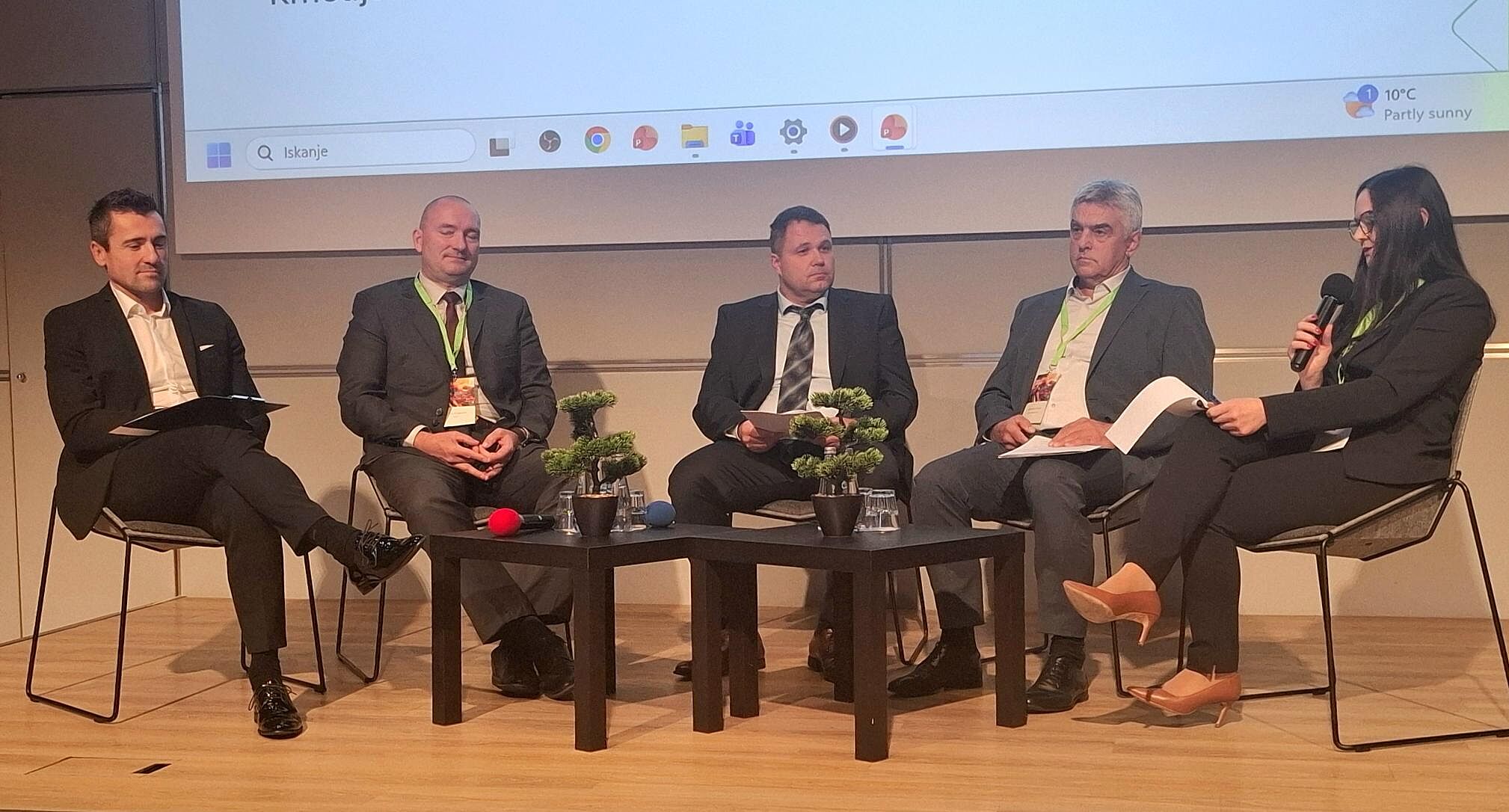
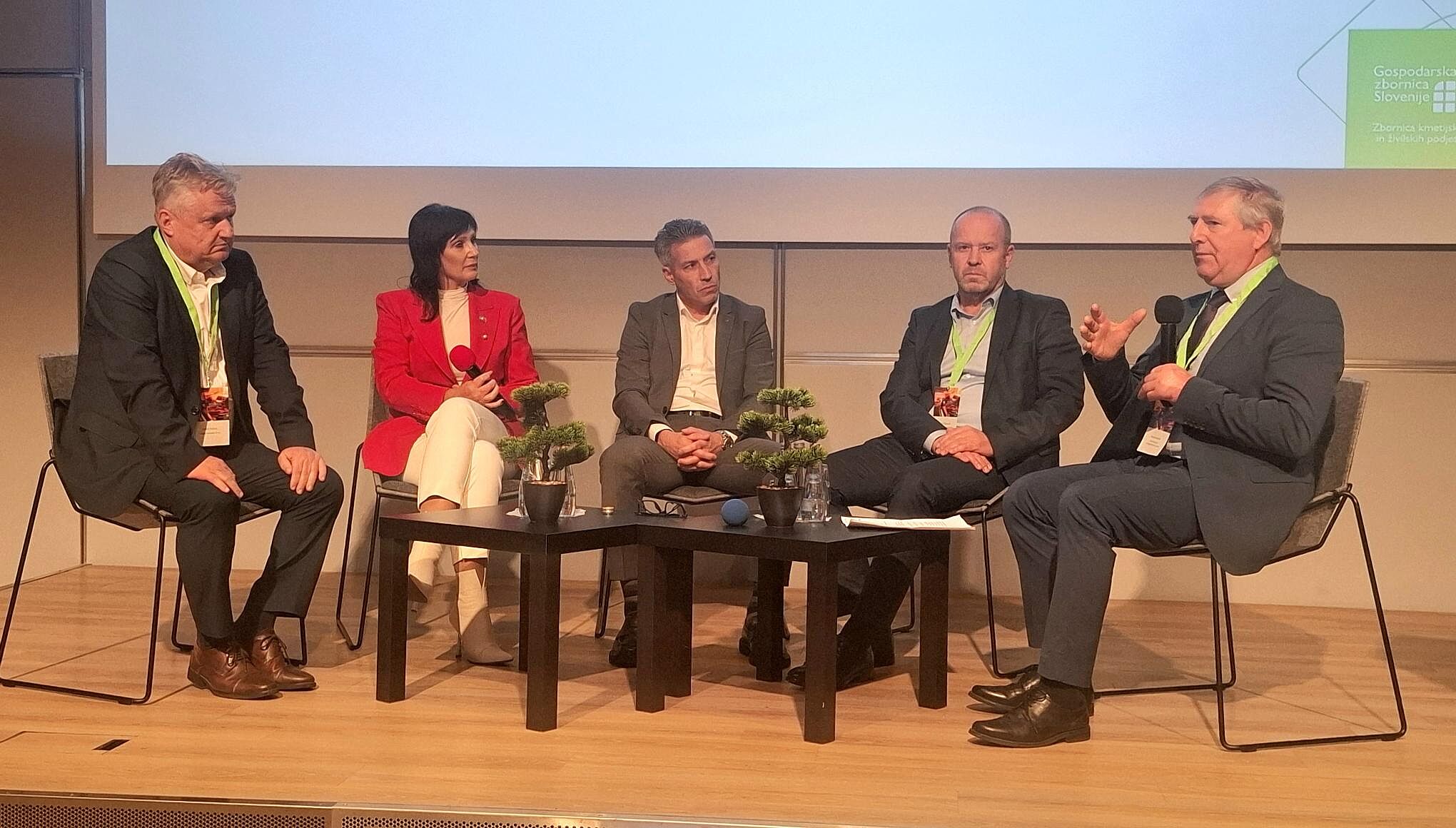
Two panel discussions featured the following participants: Dr. Jože Podgoršek, President of the Chamber of Agriculture and Forestry of Slovenia; Ben Moljk, MSc, from the Agricultural Institute of Slovenia; Aleksander Debevec, a member of the Management Board of Pivka Delamaris; Matej Resnik, Director of Meso Kamnik; Karmen Pangos, Business Director at Perutnina Ptuj; Izidor Krivec, Director of Celjske mesnine; Borut Florjančič, President of the Cooperative Union of Slovenia; and Uroš Lozej, Executive Director of Commercial Operations at Spar Slovenija.